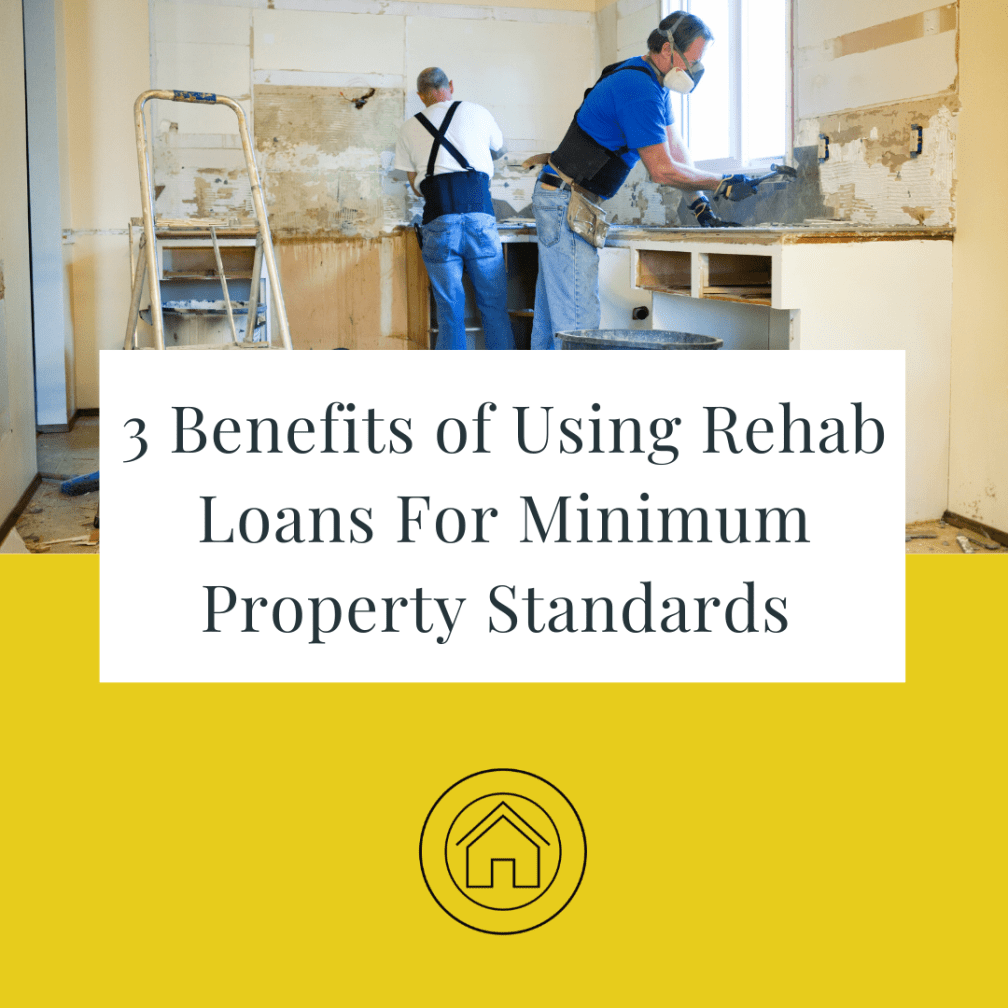

When purchasing a home, meeting minimum property standards isn’t just a requirement—it’s an essential step toward protecting your investment. For many prospective homeowners or investors, using a rehabilitation loan to bring the property up to the basic standard is a cost-effective and smart strategy. Here’s why focusing on minimum property standards with a rehab loan can be a game-changer.
1. What Are Minimum Property Standards?
Minimum property standards are basic requirements that a property must meet to be considered safe, functional, and habitable. These standards vary by lending institutions but typically include structural integrity, safety features, plumbing, and electrical systems. Lenders, like FHA and VA, mandate that homes meet these standards before they’ll approve a loan, ensuring that the home is safe and suitable for its intended use.
2. How Rehab Loans Help Meet These Standards
Rehabilitation loans, such as FHA’s 203(k) or Fannie Mae’s HomeStyle loan, allow borrowers to finance repairs and upgrades into their mortgage. Rather than taking out separate loans or dipping into personal savings, borrowers can address necessary updates as part of their home financing package. This makes meeting minimum property standards achievable and accessible, even on a tight budget.
3. The Benefits of Using Rehab Loans for Minimum Standards
- Cost Efficiency: By focusing only on repairs that meet minimum requirements, homeowners avoid the expense of full-scale renovations. This approach allows for affordable entry into a property with the assurance that it meets baseline livability and safety requirements.
- Increased Home Value: Completing essential repairs can boost a home’s market value. Even basic updates improve the property’s condition, potentially increasing its resale value over time.
- Future Investment Opportunities: Meeting minimum standards is a stepping stone. Once you’re settled, you can make additional improvements gradually, enhancing your home’s value and livability as your budget allows.
4. Choosing the Right Rehab Loan
Each rehab loan option has unique terms, so it’s essential to select the one that best aligns with your goals. An FHA 203(k) is ideal for first-time buyers or properties that require smaller-scale repairs, while the HomeStyle loan allows for a broader range of improvements.
Using a rehab loan to meet minimum property standards is a strategic move that enables you to own a home that’s both safe and structurally sound. This foundational investment opens the door to future possibilities, letting you transform the space into your dream home over time, while giving you a safe and solid place to start.
I talk more about this topic on my latest video on my YouTube channel. Watch it here!
















 uni-soul