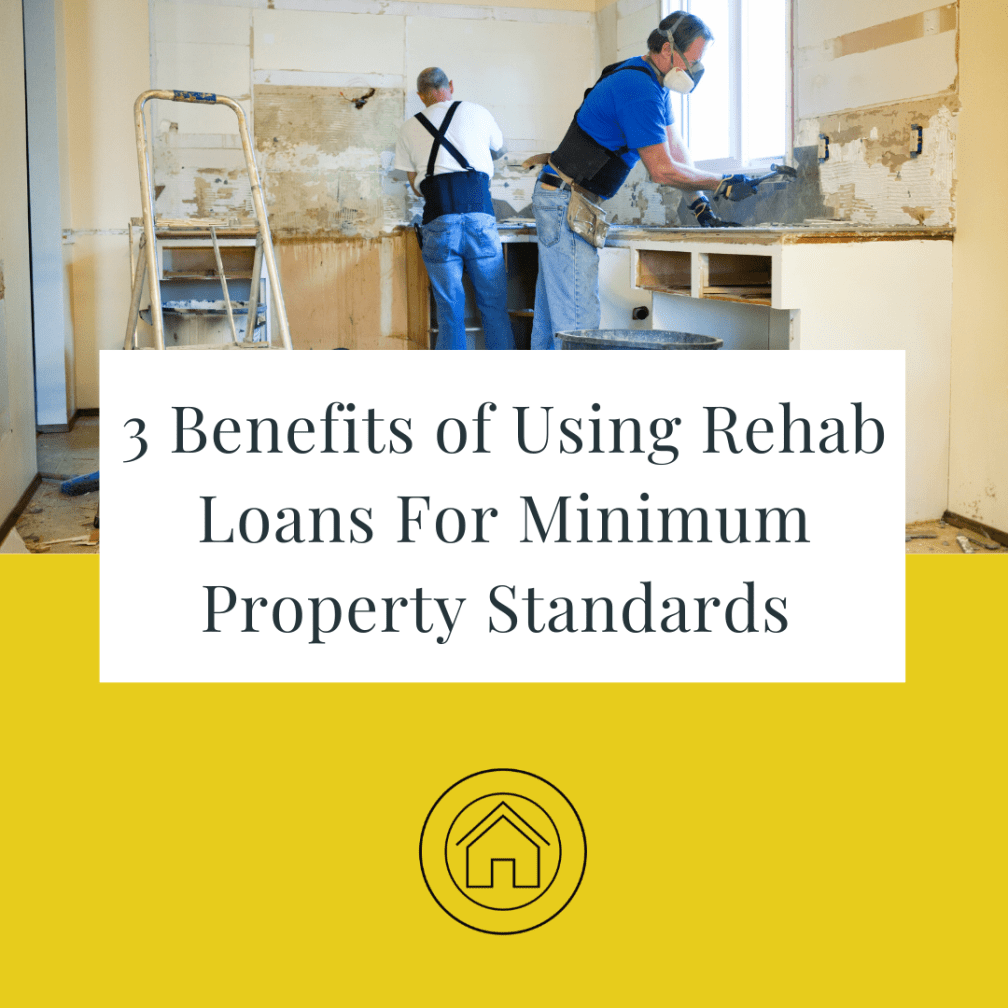
Rehab Loans for Minimum Property Standards: Why It’s a Smart Investment

When purchasing a home, meeting minimum property standards isn’t just a requirement—it’s an essential step toward protecting your investment. For many prospective homeowners or investors, using a rehabilitation loan to bring the property up to the basic standard is a cost-effective and smart strategy. Here’s why focusing on minimum property standards with a rehab loan can be a game-changer.

1. What Are Minimum Property Standards?

Minimum property standards are basic requirements that a property must meet to be considered safe, functional, and habitable. These standards vary by lending institutions but typically include structural integrity, safety features, plumbing, and electrical systems. Lenders, like FHA and VA, mandate that homes meet these standards before they’ll approve a loan, ensuring that the home is safe and suitable for its intended use.

2. How Rehab Loans Help Meet These Standards

Rehabilitation loans, such as FHA’s 203(k) or Fannie Mae’s HomeStyle loan, allow borrowers to finance repairs and upgrades into their mortgage. Rather than taking out separate loans or dipping into personal savings, borrowers can address necessary updates as part of their home financing package. This makes meeting minimum property standards achievable and accessible, even on a tight budget.

3. The Benefits of Using Rehab Loans for Minimum Standards

  • Cost Efficiency: By focusing only on repairs that meet minimum requirements, homeowners avoid the expense of full-scale renovations. This approach allows for affordable entry into a property with the assurance that it meets baseline livability and safety requirements.
  • Increased Home Value: Completing essential repairs can boost a home’s market value. Even basic updates improve the property’s condition, potentially increasing its resale value over time.
  • Future Investment Opportunities: Meeting minimum standards is a stepping stone. Once you’re settled, you can make additional improvements gradually, enhancing your home’s value and livability as your budget allows.

4. Choosing the Right Rehab Loan

Each rehab loan option has unique terms, so it’s essential to select the one that best aligns with your goals. An FHA 203(k) is ideal for first-time buyers or properties that require smaller-scale repairs, while the HomeStyle loan allows for a broader range of improvements.

Using a rehab loan to meet minimum property standards is a strategic move that enables you to own a home that’s both safe and structurally sound. This foundational investment opens the door to future possibilities, letting you transform the space into your dream home over time, while giving you a safe and solid place to start.

I talk more about this topic on my latest video on my YouTube channel. Watch it here!

8 Ways Realtors Help Buyers Find Their Dream Home With Rehab Loans

Buying a home is one of life’s most exciting milestones, but what happens if your dream home needs some serious updates or repairs? Instead of settling for a home that’s move-in ready but not quite right, consider a rehab loan to transform a fixer-upper into your dream home. Realtors are instrumental in helping buyers navigate this path, making the process easier and more rewarding. Here’s how they help you find the perfect property and secure a rehab loan to create your dream space.

1. Identifying The Right Property

Realtors can help you spot potential in homes that others might overlook. A home that needs repairs or renovations can sometimes scare off buyers, but a knowledgeable Realtor will see beyond the surface flaws and assess the true value of the property. They can guide you toward homes with good bones that can be transformed with a little (or a lot) of work.

2. Understanding Rehab Loan Options

Rehab loans, such as FHA 203(k) or Fannie Mae’s HomeStyle Renovation loans, allow buyers to bundle the cost of purchasing a home with renovation expenses. A Realtor can explain the differences between various loan types, connect you with experienced mortgage professionals, and help you choose the best financing option based on your situation.

3. Finding Homes Eligible For Rehab Loans

Not all homes qualify for every rehab loan. Realtors have the expertise to identify which properties meet the specific requirements for rehab loans. For example, FHA 203(k) loans have certain eligibility criteria that the property must meet, such as the type of repairs and the amount needed for renovations. A Realtor can ensure that you’re only looking at homes that are eligible for the type of financing you’re interested in.

4. Helping You Visualize the Possibilities

Many homes in need of renovation are sold “as-is,” meaning the seller won’t make repairs before the sale. This can make it hard for buyers to see the home’s full potential. A seasoned Realtor can help you visualize what the home could become with the right updates. They can also connect you with contractors and renovation experts to get realistic estimates for the work.

5. Negotiating A Fair Price

Because homes in need of renovation often have lower listing prices, there’s room for negotiation. Your Realtor will use their expertise to ensure that you’re getting a fair deal based on the condition of the home and the estimated cost of repairs. They’ll also help structure your offer so that it aligns with the requirements of a rehab loan.

6. Coordinating With Lenders & Contractors

Navigating a rehab loan requires coordination between the buyer, lender, and contractor. Realtors serve as your point person, making sure everyone is on the same page and that the renovation process starts as smoothly as possible after the sale. They can recommend trusted lenders who specialize in rehab loans and contractors who are familiar with the loan’s requirements.

Realtors & 203k Consultants Also Work Together During The Rehab Process. Watch Here To Learn More!

7. Handling The Paperwork

Rehab loans come with extra paperwork, such as detailed renovation plans, contractor estimates, and approval forms. Realtors help manage the administrative side of things, making sure you don’t miss important deadlines or overlook critical documentation. Their experience helps prevent delays and ensures the process moves forward efficiently.

8. Guiding You Through The Renovation Process

Even after closing, your Realtor remains a valuable resource as you begin the renovation process. They can offer advice on how to increase the home’s value, recommend reliable contractors, and provide insights on local building codes and permits. Their goal is to help you maximize your investment and turn the property into the home of your dreams.

A rehab loan opens a world of possibilities for buyers who are willing to take on a fixer-upper and transform it into their ideal home. With the help of a knowledgeable Realtor, navigating this complex process becomes much simpler. From finding the right property to securing financing and guiding you through renovations, Realtors are your partners in creating a dream home from the ground up. If you’re ready to consider a home rehab loan, connect with a realtor today to start your journey!